
Latest dietary supplement regulations
First, starting from January 2024, the registration details for seven commonly used dietary supplement raw materials, including coenzyme Q10, fish oil, melatonin, and spirulina, will be officially implemented. Products that meet the requirements can be approved without going through the traditional health food registration process.; Second, in May 2024, the State Administration for Market Regulation issued the "Administrative Measures for the Catalog of Health Food Ingredients and Health Function Catalog (Revised Draft for Comments)", which plans to further expand the scope of registered raw materials, simplify the application process, and relax the boundaries of compliance efficacy claims. ; Third, the regulatory rules for cross-border imported dietary supplements have been updated in the first half of 2024, clarifying that supplements purchased cross-border for personal use must not be sold for secondary sales, and must not be labeled with functional claims related to domestic health foods.
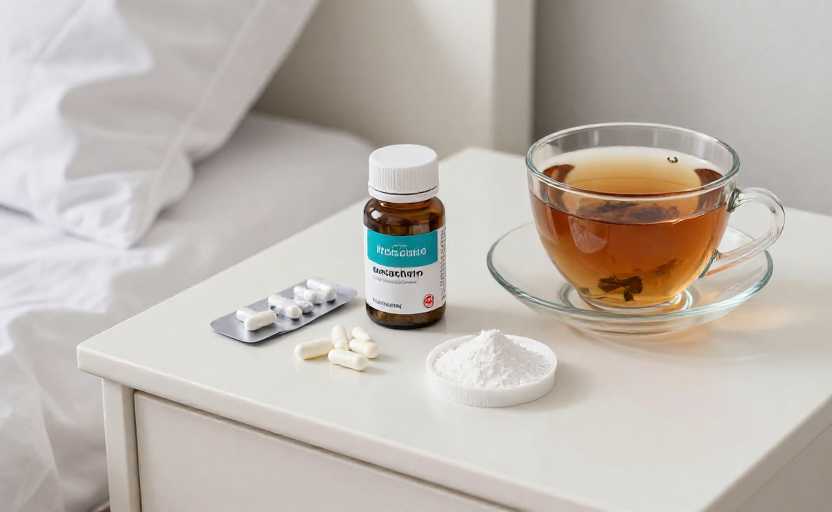
A while ago, I helped Brother Zhang, who opened a tonic store downstairs, go through the compliance procedures, and just in time to catch up with the implementation of the new raw material registration details. A deep-sea fish oil product that he wanted to buy before had to go through the health food registration process. It cost less than 1 million and waited for more than a year to get the certificate. Now, through the registration channel, as long as the purity and content of the raw materials meet the catalog requirements, it can be approved in 2 months, and the total cost is only tens of thousands of yuan. He smiled and told me that now he could finally bring down the retail price, and he no longer had to sell "high-end fish oil" worth more than 300 bottles a bottle.
If you have visited a drug store recently, you should have felt that the blue-hat vitamins that were placed in the most conspicuous position on the shelves used to cost fifty or sixty yuan a bottle. Now, blue-hat vitamins C and B vitamins, which cost more than ten yuan, are everywhere. In fact, this is the direct benefit brought to consumers by the implementation of the registration system. Oh, by the way, there is another question that people often ask: Are the imported dietary supplements purchased overseas really more reliable than domestic ones? In fact, this is not necessarily true. Dietary supplements in many European and American countries are regulated as ordinary foods. There is no need to conduct efficacy and safety verification before listing. As long as the company endorses it, domestic blue hat registered products have clear national standards for raw materials, content, and claims, so the probability of being cheated is even lower. This update of the cross-border supervision rules is actually to fill loopholes in this aspect. Previously, many purchasing agents boasted in their circle of friends that the ammonia sugar they sell can "cure arthritis" and NMN can "reverse aging and improve longevity." In the future, as long as the product does not have domestic blue hat certification, those who dare to do this will be directly punished as false advertising. If the value of the secondary sales is high enough, it may be counted as smuggling.
The academic circles are now quarreling over whether to issue separate "Dietary Supplement Regulations". Some experts in the field of public health feel that classifying all dietary supplements into the category of health foods is a bit "too broad". After all, most people buy calcium tablets and vitamins as daily nutritional supplements, and there is no need to go through the supervision process of health functions. It is better to issue separate regulations to regulate ordinary nutritional supplements and functional health foods separately, which can not only reduce the compliance costs of enterprises, but also give consumers more choices. However, many experts in the food and drug administration system hold objections. They feel that the current level of supervision is just right. The chaos of "nucleic acid health products" and "active peptide miracle drugs" that cut the elderly off was only a few years ago. If separate supervision is really relaxed, there is no guarantee that new areas hardest hit by false propaganda will not appear again, and it is ordinary people who will suffer.
It's interesting to say that the thing that attracts the most attention from the industry in this consultation draft is actually not the expansion of raw materials, but the relaxation of efficacy claims. In the past, registered dietary supplements could only make very basic claims such as "supplementing vitamin C" and "supplementing calcium". Now it is planned to allow claims such as "helps maintain the health of skin and mucous membranes" and "helps improve iron deficiency anemia" that are linked to actual use scenarios. However, a clear red line has been added: medical-related words such as "treatment", "radical cure" and "cure" must not be included, and disease-related statements such as "suitable for people with diabetes/hypertension" cannot be bound. Last year, an internet celebrity probiotic brand was fined more than RMB 200,000 for advertising that it "can kill Helicobacter pylori". If the new regulations are followed, not only will the brand be fined, but the e-commerce platform that sells the products will also be jointly and severally liable if it fails to fulfill its audit obligations.
Of the dozen or so dietary supplement brands I have been working with recently, half are rushing to register new raw materials and want to take advantage of the new regulations to grab the first wave of dividends. The other half are adjusting the layout of cross-border channels to avoid domestic regulatory red lines. To put it bluntly, whether it is an adjustment on the regulatory side or an action on the industry side, the final destination still has to be returned to consumers - after all, they were deceived by "health miracle drugs" in the past few years. It is always right to be strict. If you can really spend more than ten yuan to buy compliant and reliable vitamins, who is willing to spend a lot of money to pay IQ tax.
Disclaimer:
1. This article is sourced from the Internet. All content represents the author's personal views only and does not reflect the stance of this website. The author shall be solely responsible for the content.
2. Part of the content on this website is compiled from the Internet. This website shall not be liable for any civil disputes, administrative penalties, or other losses arising from improper reprinting or citation.
3. If there is any infringing content or inappropriate material, please contact us to remove it immediately. Contact us at:
