
Elderly Health Fund Management Committee
The core value of the Elderly Health Fund Management Committee is to accurately match scattered elderly health-related public welfare funds, policy subsidies, and social donation resources to elderly groups with real needs, without wasting a penny of love money or letting the elderly in need of assistance miss out on the protection they deserve.
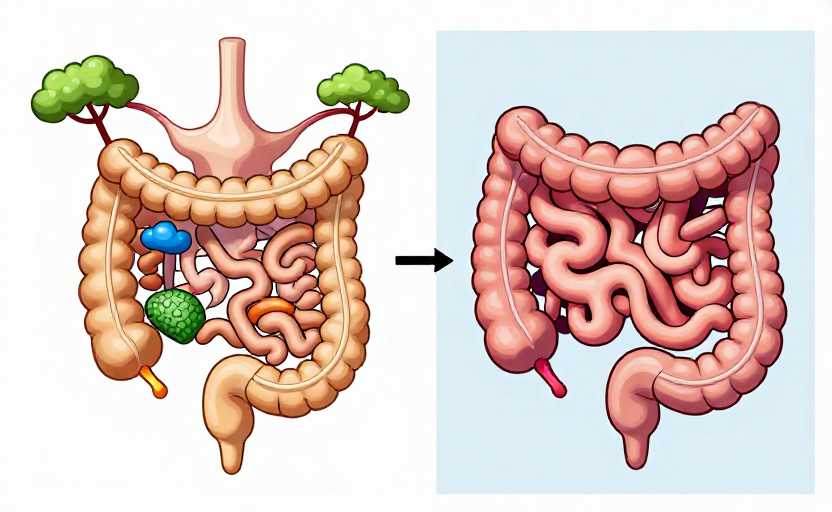
Last week, I accompanied Aunt Zhang from downstairs to the community health service center to take a blood pressure test. I happened to encounter the staff of the Management Committee checking the list of home care subsidies for the disabled elderly this quarter. In addition to the ID number and address of the elderly, the special needs of each person were also marked on the list - Grandma Li is allergic to aloe vera gel, and Uncle Wang is hemiplegic and can only sleep on his right side. The community officer next to me told me that this is all the information that the Management Committee collected from door to door last month, fearing that there would be mistakes in the service.
To be honest, my previous impression of this organization was still that of an "administrative department that manages money." I always felt that the money could just be transferred directly to the account of the elderly. It was a waste of energy to make so many twists and turns. It wasn’t until I followed the management committee of a prefecture-level city in the south for half a month of pilot research last year that I realized that there were far more ways to go than I thought.
There are actually two different voices in the industry regarding the direction of the management committee's use of funds. One is the "direct subsidy priority" group, which believes that the administrative and operating costs of the fund must be reduced to less than 5%, and more than 90% of the money must be directly converted into cash, medicines, and daily necessities and distributed to the elderly in order to live up to the trust of donors and taxpayers.; The other type is the "efficiency-first" group, who believe that a certain proportion of funds must be allocated first for demand mapping, service staff training, and assistance effect tracking, otherwise the money will be wasted. In the past two years, the local management committee did not conduct research and issued smart health bracelets to elderly people living alone. As a result, most of the elderly people cannot connect to Bluetooth or read data, and finally put them all in a drawer to gather dust. Tens of thousands of dollars in procurement funds are wasted. Of course, this does not mean that the efficiency camp is right. I have also seen some local management committees spending money in the name of research and producing a bunch of fancy research reports. In the end, no actual services were delivered, and instead they made the people dissatisfied. So to put it bluntly, there is no absolutely correct solution. The best solution is the one that suits the needs of local elderly people.
The prefecture-level municipal management committee I went to investigate last year faced the question of "excessive administrative costs" and took 8% of the annual fund for preliminary research. It organized volunteers to spend two months to identify the needs of 2,176 households living alone, disabled, and elderly people. The final statistics showed that what 62% of the elderly need most is not cash subsidies at all, but services such as home bathing assistance and prescription of chronic disease drugs twice a week. Later, they replaced all the elderly shopping cards they originally planned to purchase with service vouchers in cooperation with local housekeeping companies and community hospitals. This is equivalent to directly connecting the supply and demand sides of inclusive elderly health services, and also filling the gaps that many local long-term care insurances do not cover. During the return visit at the end of the year, the elderly's satisfaction with assistance increased from 37% before to 91%. Several donor companies that had previously raised objections also took the initiative to make additional donations this year.
Of course, management committees in various places are not without their pain points. Many management committee staff in third- and fourth-tier cities are part-time workers drawn from the civil affairs and health departments. There are very few professionals who understand both elderly health services and fund operations. Sometimes they have millions of dollars in funds in their accounts, but they don’t know how to spend them.; There are also many elderly people and their family members who are worried that funds are not transparent and that their money will be intercepted and misappropriated. These problems are real.
What’s interesting is that the solutions that various places have now explored are completely different. Some places directly hire third-party auditing companies to publish detailed accounts on the public account every quarter, ranging from buying iodophor for the elderly to 1.5 yuan a bottle, and providing home bathing assistance for 80 yuan. All are listed clearly.; Some places have hired retired teachers and old state-owned enterprise employees as voluntary supervisors, who can check accounts and follow them on visits at any time. ; Some places simply set up a WeChat group with the families of the elderly. Where each money is spent and who the elderly people are helping are directly synchronized in the group, which saves a lot of trouble of public announcements.
What impressed me the most was the last time I visited the countryside. I met Uncle Wang, who had been paralyzed in bed for three years. His wife had passed away early and his children were working in other places. He had not had a bath for more than half a year. The bathing assistant contacted by the management committee came to wash him for more than an hour. After washing, the uncle held the staff's hands and cried, saying that he thought he would not be able to take a comfortable hot bath before he died. It was then that I realized that the management committee was not in charge of money, but the real quality of life of these old people and the dignity they had in their later years.
In fact, to put it bluntly, what the Senior Health Fund Management Committee does has never been a high-level job. It just breaks up every penny that comes from society and policies, crushes it into pieces, and spends it precisely where the elderly really need it. After all, each of us will grow old one day. If we do these small things solidly now, we are actually building confidence for ourselves in the future.
Disclaimer:
1. This article is sourced from the Internet. All content represents the author's personal views only and does not reflect the stance of this website. The author shall be solely responsible for the content.
2. Part of the content on this website is compiled from the Internet. This website shall not be liable for any civil disputes, administrative penalties, or other losses arising from improper reprinting or citation.
3. If there is any infringing content or inappropriate material, please contact us to remove it immediately. Contact us at:
