
Heart disease prevention measures do not include
Preventive measures for heart disease do not include regular use of health supplements, regular infusions to "open blood vessels", intense strenuous exercise, and extreme vegetarian diets that reject all fats. This is the most practical conclusion I have come to after nine years of clinical experience in the Department of Cardiology, handling thousands of patient cases, and countless exchanges with colleagues from different departments.
Last month, I met a 62-year-old Aunt Zhang at a community free clinic. She came over with half a bag of Coenzyme Q10, deep-sea fish oil, and nattokinase. She said that she had been taking these for three years, spending more than 20,000 yuan a year, just to prevent heart disease. When the blood pressure was measured, it was 168/95, and the low-density lipoprotein in her blood lipids was more than twice as high. I asked her why she didn't take the antihypertensive medicine prescribed by the doctor, and she waved her hand and said, "It's a medicine that contains three parts of the poison. The health supplement is purely natural and has no side effects."
Interestingly, there are indeed different opinions in the industry about whether health supplements can prevent heart disease: some studies believe that coenzyme Q10 can help improve heart failure patients and people who have adverse muscle reactions after taking statins for a long time. Omega-3 in deep-sea fish oil can also regulate patients with hypertriglyceridemia. However, these are all in the category of "auxiliary treatment". There is no high-quality evidence-based evidence to support that healthy people or people with only basic risk factors can prevent heart disease by taking these supplements regularly. To put it bluntly, if you take health supplements as the core of prevention, it is equivalent to buying an in-car aromatherapy for your car as car insurance. When an accident happens, you won’t be able to use half a dime. Not to mention the money is spent, and it is easy to delay formal risk control.
After talking about the health products that young people love to buy for their elders and that the elders also like to eat, we have to mention the "Spring and Autumn Infusion to Open Blood Vessels" that has been passed down in the middle-aged and elderly circles for more than ten years.
Last winter, a 70-year-old man was admitted to the emergency department. Before winter, he went to a clinic near his home to receive Salvia injection for a week, saying that it would flush out the "junk" in his blood vessels to prevent myocardial infarction. As a result, on the fifth day after the infusion, I started having chest tightness and rash. When I was sent to the hospital, I had developed allergic heart failure. It took me almost two weeks before I was discharged. The so-called "vascular garbage" is actually atherosclerotic plaque attached to the artery wall, which is similar to the scale in the water pipes at home. If you use ordinary infusion liquid to flush it out, it is impossible to flush it away. On the contrary, it is easy to put a burden on the heart due to the adverse reactions of the infusion. Of course, some colleagues at the grassroots level have mentioned that for patients who have been diagnosed with severe coronary stenosis and have recently experienced ischemic symptoms such as chest tightness, short-term infusion of blood-activating drugs can indeed relieve symptoms. However, this is a treatment method and is not a routine preventive measure that ordinary people can do. It is completely different.
Compared with the old pitfalls that were easily stepped on by their elders, young people now believe more in the saying that "vigorous exercise can break away blood vessel plaques."
What particularly impressed me was a 32-year-old Internet programmer I hired last year. His physical examination showed high blood fat. I heard from friends that running more often can wash away plaques. He who never exercised normally had to run 5 kilometers every night, and sometimes worked overtime until 10 o'clock and had to go to the playground to do laps. Within 20 days of running, he collapsed at the subway station with chest pain. He was sent to the hospital for a coronary CTA. It was found that the plaques on his anterior descending artery had shown signs of rupture, and he almost turned into an acute myocardial infarction. It’s not that exercise is bad. Regular moderate-intensity exercise is one of the core measures to prevent heart disease. However, this strenuous exercise of “lying down on weekdays and rushing on weekends” is not prevention at all. Instead, it will cause blood pressure and heart rate to spike in a short period of time, increasing the risk of plaque rupture. It is completely putting the cart before the horse. I talked to colleagues in sports medicine before, and they also said that high-intensity interval training is indeed good for cardiopulmonary function, but the premise is that there is a foundation of exercise and it is done step by step. Ordinary people do it hard without any foundation. It is no different from slamming the accelerator of an engine that is already aging. It is not bad if it is not bad.
There is another misunderstanding that is common to both young and old people, which is that as long as you are completely vegetarian and don’t touch any fat, you won’t get heart disease.
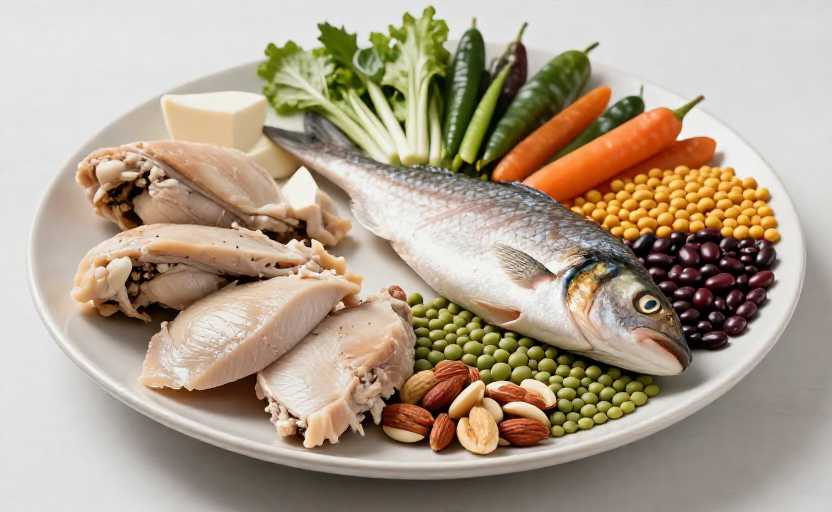
A distant cousin of mine believes in the so-called "vegetarian health regimen" and has been a vegetarian for 4 years. She doesn't touch eggs, milk, or meat. Last year, during a physical examination, she was found to have abnormal blood lipids. The high-density lipoprotein (also known as "good cholesterol") was extremely low. She often suffered from palpitation and premature beats. When she came to see me, her face was sallow and she felt weak when she walked. Do you think it's strange? I didn’t eat any oil, but my blood lipids were a problem? In fact, the human body needs balanced nutrition. Appropriate unsaturated fatty acids and high-quality protein are essential substances to maintain the elasticity of blood vessels and the normal operation of the heart. An extreme vegetarian diet that completely rejects all fats will cause metabolic disorders and increase the risk of heart disease. Of course, this does not mean that vegetarianism is bad. I also have friends who have been vegetarians for more than ten years. They will combine enough beans, nuts, and B vitamin supplements, and their nutritional intake is no different from omnivorous people. If ordinary people just copy homework and just go vegetarian without knowing any combinations, there will definitely be problems.
To be honest, I have seen too many people spend a lot of money and energy on these useless "preventive measures" and instead forget about the really useful things: they can't quit smoking, stay up until two or three in the morning, eat more oil and salt than anyone else, and don't want to take medicine when their blood pressure is high.
The prevention of heart disease is really not that fancy. In short, it is just a few things: quit smoking (including second-hand smoke), control the amount of oil and salt you eat every day, take a walk a few afternoons a week, do Tai Chi, have regular physical examinations and control blood pressure, blood sugar, and blood lipids within the normal range. It is more effective than spending tens of thousands on health care products, injecting ten fluids, and running and exercising vigorously. Those prevention shortcuts that sound easy and even a bit "magical" are mostly pitfalls.
Disclaimer:
1. This article is sourced from the Internet. All content represents the author's personal views only and does not reflect the stance of this website. The author shall be solely responsible for the content.
2. Part of the content on this website is compiled from the Internet. This website shall not be liable for any civil disputes, administrative penalties, or other losses arising from improper reprinting or citation.
3. If there is any infringing content or inappropriate material, please contact us to remove it immediately. Contact us at:
