
Summary and reflection on male preventive health knowledge training
At present, the biggest obstacle to preventive health care among men in China has never been the insufficient penetration of health knowledge, but the result of the combination of the "stigma + luck mentality" at the cognitive level, the "inertia first + post-priority" at the behavioral level, and the mismatch between the existing health science supply and men's actual needs.
This is a public welfare training organized by the community joint district health center. The 34 people who came ranged from 22-year-old programmers who just joined the company to 58-year-old factory workers who are about to retire. We did a small test before the start. 87% of the people could open their mouths and name at least 3 men's health information. Health precautions - don't sit for long periods of time, smoke less, and have regular physical examinations. The instructions were smoother than what was written in our courseware. But when asked if I could sleep for 3 days before 12 o'clock last week, only 4 people raised their arms. The contrast was so big that several of us organizers looked at each other on the spot.
It is also interesting to say that there have always been two completely different ideas in the industry regarding the "useless" issue of men's health science popularization. Teachers who do public health education at the CDC always feel that the density of science popularization is not enough, and they have to repeatedly push the time points of "checking blood lipids and blood pressure every year at the age of 30, PSA testing at the age of 40, and regular gastrointestinal endoscopy at the age of 50" in front of everyone. If you check the presence too much, you will always remember it; but Dr. Li from the Department of Urology who often visits our community does not agree with this statement at all. He If you tell an older man that "staying up late for a long time will increase the risk of cancer," he can give you an example of "My second uncle smoked cigarettes all his life and lived to 90." If you say "If the PSA level is high, you will postpone surgery, and you may need to have a urinary catheter inserted in the future." He will be so nervous on the spot that he will ask you what appointment you will get next week. Essentially, your words did not touch their concerns.
From the perspective of our front-line training, in fact, both sides are reasonable. We ourselves have also reflected on the pitfalls we have stepped into before. In the first two years of training, I always thought, "I want to teach everyone the most comprehensive knowledge." From adolescence acne to elderly prostate care, I made a 50-page PPT. After two hours of lecture, everyone was drowsy. When the session ended, the manual was left on the chair and no one took it. This time we simply cut off half of the theoretical content and included a real case from last year's jurisdiction: a 42-year-old freight driver always suffered from back pain. He thought it was from long-distance running and wore plasters for half a year. In the end, the pain was so bad that he couldn't straighten his back and went to check. It was early stage of kidney cancer. Fortunately, he cut out a kidney and saved his life. After the lecture, several young men in the audience who were checking their mobile phones put their mobile phones back into their pockets. It was much more useful than a 10-minute lecture on the pathogenesis.
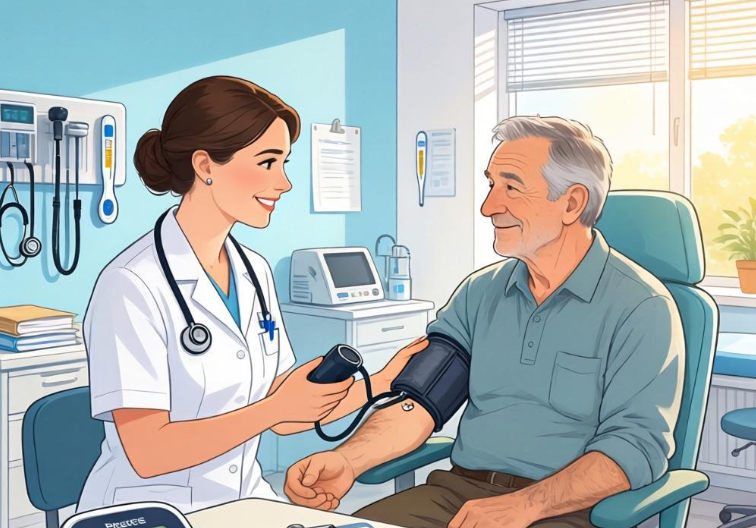
There was an interesting episode in the middle of the training. During the break, Master Wang, who was in his 50s, secretly pulled me to ask me. He said that his wife kept urging him to take antihypertensive medicine every day, but he was not dizzy or dizzy. Was it because his wife was just worrying about it? I took his blood pressure on the spot, and it was 160. He was confused and said, "I don't feel anything." You see, this is the common cognition of most men: no symptoms mean no disease, minor problems can be dealt with, but going to the hospital to find out something will only make you upset. The sentiment of hiding illnesses and avoiding medical treatment is much stronger than that of women. There was also a young man in his 30s who asked me privately that he had been urinating frequently recently, whether he had kidney deficiency, and whether he should buy the kidney-tonifying pills sold in the live broadcast room. I asked him to check his urine routine first and not to take supplements blindly. He was still dubious and said, "Aren't you in the health care business? Why don't you let me buy health care products?"
It’s no wonder that everyone has this prejudice. Now when “men’s health care” is mentioned, many people’s first reaction is small advertisements on telephone poles and IQ-tax kidney-tonifying products in live broadcast rooms. It is true that unscrupulous merchants ruined the market in the past, causing many people to think that “men’s health care = cheating.” But in fact, regular men’s preventive health care does not sell those messy things at all, but just tells you some very practical little things: don’t go to the urology department to see if your bifurcation lasts for more than a week, don’t take painkillers if you have a headache and measure your blood pressure first, don’t touch cephalosporins after drinking alcohol no matter what others say, and sit with a waist support for 20 minutes to raise your buttocks when you sit for a long time. These are all health care, not so mysterious.
After this training, we set up a communication group. Half a month later, there are still people asking questions in the group. Some people said that after sitting for half an hour, they stood up to get a drink of water as we said. The waist is indeed not as sore as before. There is also an elder brother who actually checked the PSA last week. The indicators were normal, and he specifically reported in the group that he was safe. To be honest, when doing trainings before, I always thought about achieving perfect results and getting everyone to develop healthy habits. But now I have changed my mind. We engage in grassroots preventive health care. We are not trying to train everyone to be a health expert. Next time we train, we plan to cut off all PPTs and let Dr. Li sit there to answer questions and answer questions. When leaving, each person is given a palm-sized card with the five most practical precautions printed on it, which you can read in your pocket. It can make everyone remember one more thing and have one less minor problem, which is better than anything else.
Disclaimer:
1. This article is sourced from the Internet. All content represents the author's personal views only and does not reflect the stance of this website. The author shall be solely responsible for the content.
2. Part of the content on this website is compiled from the Internet. This website shall not be liable for any civil disputes, administrative penalties, or other losses arising from improper reprinting or citation.
3. If there is any infringing content or inappropriate material, please contact us to remove it immediately. Contact us at:
