
Healthy sleep time for women
For the vast majority of adult women aged 18-64, the reference length of healthy sleep issued by the Chinese Sleep Research Association and WHO is 7-9 hours. However, this is by no means a one-size-fits-all rigid standard. Ultimately, it must be dynamically adjusted based on age, physiological stage, and body feedback.
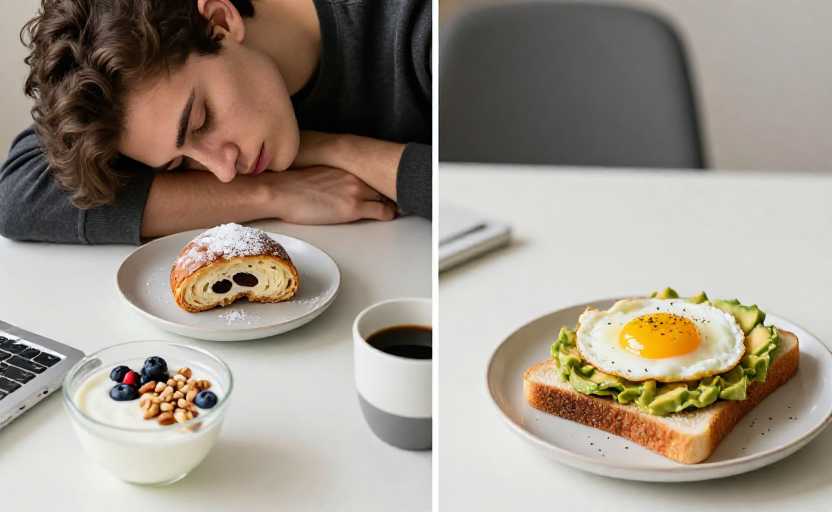
Xiao Zhou, a 28-year-old planning girl who I contacted a while ago, stayed up for two weeks in a row while working on the Q3 project, sleeping less than 5 hours a day on average. First, her aunt delayed it for 10 days, and the acne on her chin couldn't even be covered with concealer. After the project came online, she adjusted her schedule and slept at 11:30 and 7:00 every day, which was exactly 7.5 hours. Within two weeks, her whole body was back to normal, and she didn't even get the migraines she always had before.
I have read a lot of content advocating the "Short Sleep Success Study" before. It is said that powerful people only sleep 4 hours a day, and they are full of energy when they wake up to work on their careers. The core basis of this school is "As long as the deep sleep time reaches the standard, light sleep and excessive sleep are a waste of time." This is not completely wrong, but it really needs to be discounted when it comes to women. A meta-analysis in the 2023 "Sleep Medicine Review" has long mentioned that due to the influence of menstrual cycles and hormone fluctuations, women's deep sleep needs are 15-20 minutes higher than men on average. Many women who claim that 4 hours of sleep a day are enough either rely on coffee and functional drinks to keep their nerves excited, or they have become accustomed to fatigue due to long-term sleep deprivation. If they do sleep monitoring, most of the deep sleep duration cannot even reach 60% of the standard value.
There is no need to stick to the 7-9 hour scale, as the needs of different physiological stages are far different.
Let’s talk about adolescent girls. Nowadays, many high school girls are forced to sleep less than 6 hours in order to answer two more sets of questions every day. I have met a girl who was a sophomore in high school. She slept 5.5 hours a day for a long time. She gained 8 pounds in half a year and lost a lot of hair. Later, she After listening to the advice, her mother forced her to go to bed 40 minutes earlier every day and get 6.5 hours of sleep. Instead, she became less distracted in class and her weight stabilized. Growth hormone is mostly secreted during the deep sleep stage during adolescence. Not getting enough sleep not only affects growth, but also disrupts leptin secretion, making it easier for her to gain weight.
During the pregnancy and childbirth period, there is no need to be bound by standards. A few days ago, a best friend who just gave birth to a baby complained to me, saying that her mother-in-law said that she slept too much every day and it was not conducive to recovery, so she forced her to get up and move. As a result, she had an emotional breakdown for three days in a row and almost suffered from postpartum depression. People tend to feel sleepy when progesterone rises. As long as you can sleep, it is normal to sleep for 10 hours a day. Don't talk about the old saying that "sleeping too much makes it difficult to give birth". Only when you sleep enough can you have the physical strength to give birth and the energy to take care of the baby. This is the real truth.
There are also many women who enter perimenopause. Due to the decline in estrogen, their sleep becomes fragmented. They often lie down for two or three hours and cannot fall asleep. They wake up too early. In total, they can sleep about 6 hours a day. As long as they do not feel dizzy during the day and their mood is stable, there is no need to force themselves to lie down for 8 hours. The more they lie down, the more anxious they become, and the more they cannot sleep.
There are two opinions that are very loud on the Internet right now. One is that "not sleeping enough for 8 hours is a chronic suicide" and the other is that "not sleeping at 11 o'clock is shameless, and not sleeping at 1 o'clock is not life-saving." In fact, both of them are too absolute. The core of sleep is first to have a stable rhythm, and secondly to sleep for a complete sleep cycle - a cycle is about 90 minutes. If you sleep for 5 cycles, that is 7.5 hours. When you wake up, you will be in the light sleep stage, and you will feel refreshed. ; If you squeeze in 8 hours, and you happen to be woken up by the alarm clock in the deep sleep stage, you will be drowsy for most of the day. If your long-term fixed schedule is to go to bed at 2 o'clock and then go to bed at 10 o'clock, and the rhythm is always stable, then even if you "stay up late" every day, the impact on your health will be much smaller than an irregular schedule of going to bed at 10 o'clock today and going to bed at 3 o'clock tomorrow.
I have been doing sleep consulting for the past three years. Generally, when I give advice to women, I don’t give numbers first. I ask three questions first: When you wake up in the morning, can you get up naturally after lying down for 10 minutes? No need to rely on more than two cups of coffee during the day, and no uncontrollable sleepiness? Wouldn't you have an emotional breakdown over a trivial matter? If you are satisfied with all of them, even if you sleep 6.5 hours or 9.5 hours a day, it is your healthy sleep time.
There is really no need to count the number of sleep hours, and there is no need to lie down just to make up for the number. Sleeping is like wearing shoes. Only your body knows best whether it is comfortable or not. Just listen to the standards that are imposed on you.
Disclaimer:
1. This article is sourced from the Internet. All content represents the author's personal views only and does not reflect the stance of this website. The author shall be solely responsible for the content.
2. Part of the content on this website is compiled from the Internet. This website shall not be liable for any civil disputes, administrative penalties, or other losses arising from improper reprinting or citation.
3. If there is any infringing content or inappropriate material, please contact us to remove it immediately. Contact us at:
