
Elderly Health Management Major
The geriatric health management major is by no means a "training direction for caregivers who serve the elderly" in public perception, but a cross-application major that spans clinical medicine, public health, rehabilitation, and geriatric sociology. The current domestic talent gap has exceeded 3 million. It is one of the few potential directions in the silver economic track that has "obvious mismatches between supply and demand, clear technical barriers, and sufficient room for growth."
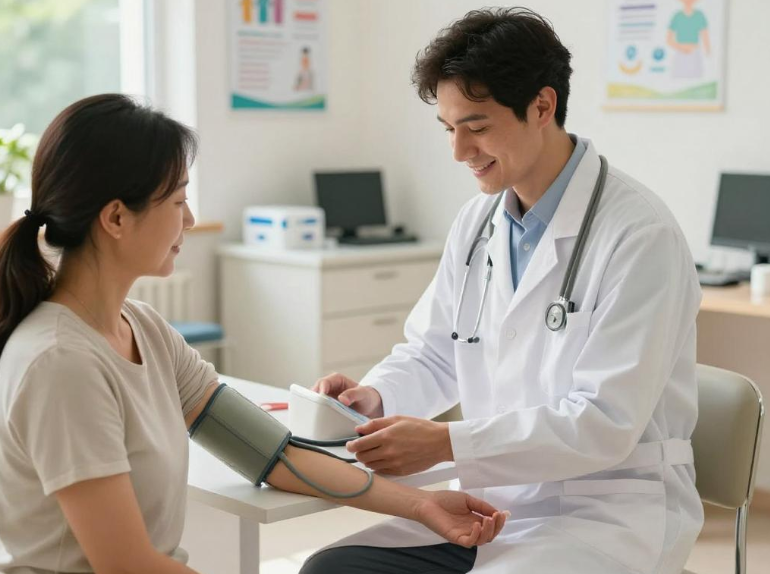
Don’t think I’m just talking empty words. When I was working at the community health service center last month, I happened to meet Xiao Zhou, who had just graduated from this major and had been working for one year. That day, she carried a frayed canvas bag containing a blood pressure monitor, a popular science manual on antidiabetic drugs, and two boxes of sugar-free peach cakes for Uncle Li, who lived alone, and came to her home for quarterly health follow-up visits. Uncle Li has diabetes and chronic obstructive pulmonary disease. His son was busy in other places. He thought it was troublesome to go to the hospital, so he adjusted the dosage of medicine by himself. He was hospitalized once last winter. After Xiao Zhou took over, he spent three days chatting with the uncle to find out about his habit of not throwing away leftovers. He also put the medicine prescribed by the doctor into medicine boxes with beeps for morning, noon and evening. He also signed up for him a simplified Tai Chi class with the community college for senior citizens. In the past six months, the uncle's blood sugar has been very stable, and he has never been to the emergency room again.
This is the misunderstanding that many people have about this profession. They think it is nothing more than helping the elderly measure their blood pressure and run errands. In fact, it is not at all. Xiao Zhou said that when she was in school, she had to learn not only hard-core medical content such as "Prevention and Treatment of Common Diseases in the Elderly" and "Rehabilitation Assessment", but also humanistic courses such as "Geriatric Psychology" and "Social Work Practice". She even had to learn how to organize activities for the elderly and how to help the elderly and their families make health decisions. The things she learned were very complicated, but everything was easy to apply at work.
Interestingly, there is still no unified statement in the industry regarding the training direction of this major. Most teachers in vocational schools believe that after graduation, students must first go to the front line, start with basic care and follow-up, and spend half a year interacting with the elderly before they know what their real needs are. ; Experts from the geriatric department of tertiary hospitals believe that the general humanities class hours should be shortened and more clinical practice content should be added. After all, the core of elderly health is "treating and preventing diseases", and professional ability is the hard currency. ; The bosses of chain nursing homes have other ideas. They say that what is most lacking now is management positions that understand health management and can withstand operational pressure. It is best to know some new media and be able to make short popular science videos to attract customers. The three parties have been arguing for nearly five or six years, and there is still no conclusion yet. However, many schools have begun to cross the river by feeling the stones, adjusting their curricula while cooperating with institutions to provide targeted training.
To be honest, the current pain points of this profession are quite obvious. A while ago, I was chatting with an admissions teacher at a health school. She was extremely worried. She said that many parents waved their hands when they heard the word "elderly", thinking that their children would be working as caregivers, which was not nice to say, and the wages were still low. This is not entirely biased. If fresh graduates go to ordinary nursing homes in third- and fourth-tier cities, it is true that a lot of them can earn three to four thousand a month. But I also know a girl who has graduated three years ago. She runs a home health management studio in Hangzhou, specializing in serving high-income retired groups. She provides customized health plans for the elderly, coupled with door-to-door rehabilitation services. Now she has more than 200 regular customers, and her annual income has already exceeded 300,000. To put it bluntly, this industry has not yet reached the stage where academic qualifications are required. As long as you can really solve the problems of the elderly, there is no need to worry about having no way out.
You can also refer to the data released by the Ministry of Civil Affairs a while ago. In 2035, my country's elderly population over 60 years old will exceed 400 million, and the number of disabled and semi-disabled elderly people will exceed 70 million. Currently, there are less than 200,000 certified elderly health management talents in the country, and the gap is ridiculously large. When I attended the Silver Economy Summit before, a product director of a major Internet company complained that they are now recruiting product managers related to elderly health. They would rather have ordinary undergraduates who have graduated from this major and have been on the front line for two years, rather than top students who have graduated from computer science from a prestigious school but do not understand the elderly at all. You don’t even know that the elderly cannot use touch-screen keyboards and can’t hear fast voice prompts. The products they make are not used at all.
I met Xiao Zhou again last week. She had just finished giving a lecture on cardiovascular and cerebrovascular diseases in autumn at the elderly activity center in the community, and she still had throat lozenges in her pocket for a few elderly people with pharyngitis. I asked her what she thought was the core ability in this industry. She thought for a long time and said that it was actually not about memorizing pathological knowledge, but "being able to be a translator": translating the doctor's "low-salt and low-fat diet" into "Don't eat more than a beer bottle cap in salt every day, and don't add more to the stew." "Too much soy sauce", and translated the old man's nagging "I feel uncomfortable and can't sleep lately" into an accurate description of symptoms and fed it back to the doctor. In the meantime, he also helped to persuade the uncle who was reluctant to spend money for a physical examination, and comforted the aunt who was always worried that she was terminally ill.
To put it bluntly, what is the "nursing worker" trained by this profession? It is the bridge between millions of elderly people and the medical system. Whether the bridge is built stably or not is directly related to the quality of life of many elderly people in their later years. If you ask me if it's worth it, I can only say that if you don't object to dealing with the elderly, and don't want to squeeze into those popular majors that are crazy, this track is really quite good.
Disclaimer:
1. This article is sourced from the Internet. All content represents the author's personal views only and does not reflect the stance of this website. The author shall be solely responsible for the content.
2. Part of the content on this website is compiled from the Internet. This website shall not be liable for any civil disputes, administrative penalties, or other losses arising from improper reprinting or citation.
3. If there is any infringing content or inappropriate material, please contact us to remove it immediately. Contact us at:
