
Psychological Counseling AI Assistant
The core positioning of psychological counseling AI assistants that have been put into use now is as an inclusive supplementary tool for professional psychological counseling services. It can neither completely replace the emotional value and complex case handling capabilities of real counselors, nor is it an entertainment product of "chat robots". Its usage boundaries, effect feedback and ethical norms are still in the stage of industry co-construction.
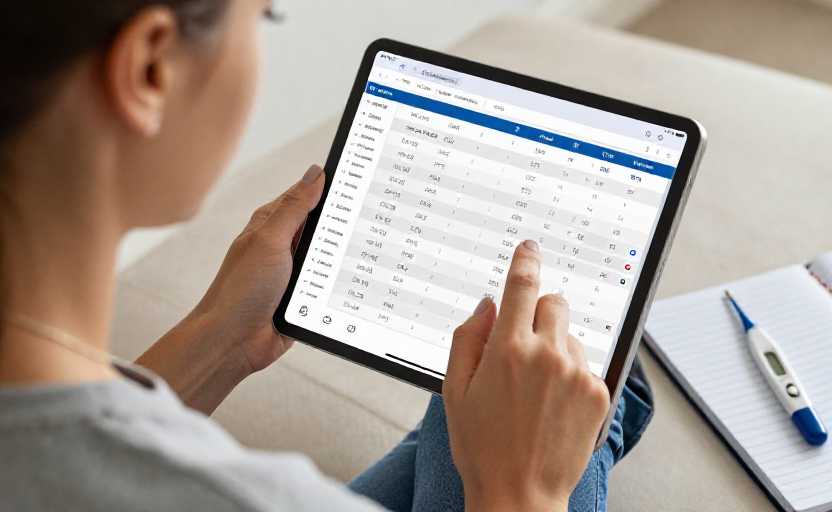
The first time I intuitively felt the usefulness of AI was when I was supervising at a psychological center of a university last year. In the backend pending record at two o'clock in the morning, there was a 37-page conversation between a first-year graduate student and an AI: her roommates were all asleep, and she did not dare to cry out. The paper due the next day was revised to the third version but was rejected by the instructor. In addition, she had just had an argument with her boyfriend who lived in a different place. Her hands were so shaking that she could not even press the button to make an appointment for the next day's consultation. She clicked on the school's online AI psychology portal with the mentality of giving it a try. She had no expectations, and was even prepared for the AI to tell her, "You have to work harder." However, the AI first sent her a 3-minute abdominal breathing guide. After her mood stabilized, it helped her step by step: What is the first thing she wants to solve now? Is the stuck point in the paper that cannot be revised a direction issue or a presentation issue? Is there any other way to interpret the sentence about quarreling with my boyfriend?
By the time she closed the conversation window, it was almost dawn. She calmly made an appointment for a real-person consultation the next morning, and did not scratch her arm with a razor blade like she did when she had an emotional breakdown last time. Later, she told the consultant that if she hadn’t had the AI that day, she didn’t know what she would have done. “I didn’t want to wake up the teacher on duty in the middle of the night, and I didn’t want others to think I was being pretentious, so I told the AI that there was no need to bear any burden. ”
This scenario just steps into the blank space of current real-person psychological counseling services. The backend data I came into contact with from three leading domestic psychological AI R&D teams shows that 80% of user consultation requests are concentrated in three categories: mild workplace emotional counseling, pre-exam anxiety relief, and sorting out daily conflicts in intimate relationships. The duration of a single consultation is mostly 15 to 30 minutes, which is far from the need to initiate individual case intervention. Without AI, more than 70% of these users would not take the initiative to contact psychological counseling - after all, real-person consultation often costs hundreds of yuan an hour, and the shame of "showing one's weaknesses to a stranger" is enough to keep most people away.
Of course, the controversy over AI in the industry has never stopped, and the attitudes of consultants from different schools are quite different.
Most psychoanalytic teachers are skeptical about AI. Last time I attended an industry salon, a veteran who has been doing psychoanalysis for 20 years said it very directly: "The core of psychological counseling is 'seeing'. When you are sitting across from you, your voice is shaking when you say 'I'm fine' and your fingers are clenched until your knuckles turn white. How can AI capture these non-verbal information?" Empathy based on training data is, in the final analysis, a standard answer calculated by a program, and does not really capture the other person's emotions. ”This kind of doubt is not unreasonable. Last year, there was a case where a user told the AI that he had suicidal tendencies, but the AI would only say "you have to love life" over and over again, which made the user even more depressed.
However, many counselors who practice cognitive behavioral therapy (CBT) are already actively using AI as an auxiliary tool. CBT itself has a large number of standardized work modules: emotional check-in, automatic thought recognition, correction of cognitive distortions, review of daily exposure exercises... These contents do not require too complex emotional resonance, but require high immediacy - for example, a visitor with a tendency to overeat can't help but induce vomiting after eating. The current emotions and thoughts are the most real. If you wait for the weekly consultation to review, you will have forgotten your feelings at that time. With AI, you can record and sort out at any time. When you see a real counselor, you can directly use the chat records as material, which is more than twice as efficient. I myself now recommend compliant AI tools to clients who are assessed to be mildly anxious and need daily CBT exercises. It is much more cooperative than asking them to write their own emotional diaries. After all, most people are too lazy to write, but are willing to ramble on to the AI.
The biggest problem now is not whether AI is "smart" enough, but that the boundaries and ethics have not been clearly understood. A psychological AI tool previously purchased by a company directly synchronized the records of "self-harm tendencies" mentioned by employees to HR. In the end, the person involved was persuaded to quit, causing an uproar in the entire industry. ; In order to reduce risks, some AIs directly call the police as soon as the user mentions keywords such as "want to die" and "don't want to live." As a result, one user just complained about working overtime and said it casually, and was knocked on the door by the community and the police in the middle of the night. He was so embarrassed that he wanted to move. There is no unified solution to these problems until now: Who owns the ownership of the user's consultation records? What is the reasonable threshold for AI to set to identify suicide risk? If the AI misjudges the condition and delays intervention, is the platform or the supervising consultant responsible? These issues are still being debated and there is no conclusion yet.
In the final analysis, the current psychological counseling AI is more like an "emotional tree hole + practice tool" that will not tire. It is obviously impossible for you to expect it to be able to understand the knots you have hidden for more than ten years and help you deal with complex childhood trauma and intimacy disorders like a senior counselor. But if you can’t find anyone to talk to during emo in the middle of the night, or you need feedback from someone at all times while doing CBT exercises, it’s better to use it than to hold it in yourself.
As for whether there will really be AI that can replace human counselors in the future? At least I have been doing consulting for more than ten years, and I think it is impossible - the twists and turns in people's hearts, those spoken and unspoken words, those emotions hidden in the tone, pauses, and eyes, how can it be so easily calculated by data?
Disclaimer:
1. This article is sourced from the Internet. All content represents the author's personal views only and does not reflect the stance of this website. The author shall be solely responsible for the content.
2. Part of the content on this website is compiled from the Internet. This website shall not be liable for any civil disputes, administrative penalties, or other losses arising from improper reprinting or citation.
3. If there is any infringing content or inappropriate material, please contact us to remove it immediately. Contact us at:
