
Mental health courseware
It can make the audience willing to read, understand and use it, without spreading misunderstandings, without causing secondary harm to vulnerable groups, and without crossing the line and giving diagnosis and treatment suggestions that are beyond the scope of popular science.
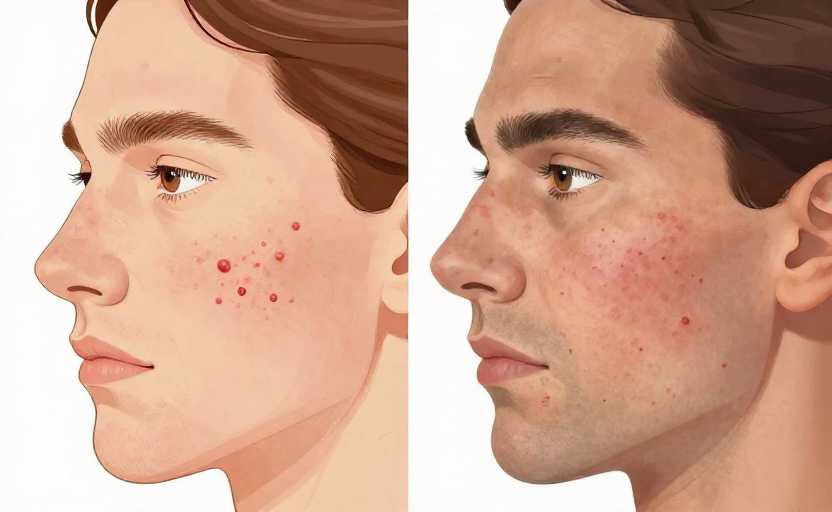
Speaking of which, when I first came into contact with the production of popular science courseware, I encountered a big pitfall. At that time, I was helping a college counselor to prepare psychology courseware for freshmen admission. I browsed through the literature for half a month and compiled the diagnostic criteria for common emotional disorders in the DSM-5 and the latest white paper on the mental health of college students in China. The page was clean and professional, and I was quite proud of myself. As a result, during the trial lecture, the students in the audience were either scrolling through their mobile phones or frowning the whole time. After the end, a student with a tendency to depression who had made an appointment for psychological consultation in advance secretly came over and said with red eyes, "I checked the standards in the courseware, and it seemed that I met every item. Is it true that I can't be cured?" I looked through the chat history for a long time that day, and then I realized that what I was doing was not popular science courseware. It was basically cutting up professional teaching materials and giving them directly to ordinary people with no foundation. Not to mention being useful, it almost caused people trouble.
Speaking of which, I have to mention two production directions that are quite controversial in the industry. They have been arguing for many years and there is no conclusion. One group is academic researchers, who insist that all courseware content must be 100% rigorous, all data must be labeled with sources, and professional terms cannot be interpreted casually. There must be no loose guidance such as "3 minutes of mindfulness cures anxiety" or "not being able to sleep is a precursor to depression." It is not even recommended to put self-measurement tables in popular science courseware to avoid misleading people into self-diagnosis. The other group are social workers and corporate EAP specialists who are engaged in front-line practice. They believe that science popularization must first be "useful". If it starts with "emotional ABC theory" and "cognitive behavioral therapy core logic", ordinary people will be distracted after listening to it for two minutes. It is better to directly teach everyone "when you work overtime until you collapse, go to the corridor to blow the wind for 3 minutes and take 5 deep breaths" and "stop talking when you quarrel with your family, drink water and wait for 10 seconds."
In fact, there is nothing wrong with both positions, it's just that the scenarios they adapt to are different. When making teaching courseware for psychology students, you must check the accuracy of every term. A single word difference may affect subsequent professional judgments. ; If popular courseware is given to retired people in the community and young employees who have just joined the job, too hard professional content will become a threshold, and it is not as effective as a down-to-earth point. Last year, I gave emotional adjustment courses to retired elderly people in the community. I deliberately changed the "ABC Theory of Emotions" to "Why are you so angry about the same thing that you can't sleep, and the neighbor's aunt turned around and went to square dance?" I also added several small things that really happened in the community, such as Aunt Zhang was kicked out because of her position in the square dance. I was so angry that I developed high blood pressure. Then I changed my mind and thought about it. The entire courseware did not mention a single professional term. After the end, seven or eight aunties pulled me to ask questions and said, "I can understand everything you said. Last time my son talked back, I was so angry that I couldn't calm down for a long time. I will try the method you said next time."
There is another pitfall that many novices can easily step on, and I almost made it before. He just always thinks about "solving the problem" and often adds "20 self-assessment questions for depression" and "testing whether you have anxiety" in the courseware. He also likes to give advice such as "if you are in a bad mood, just exercise more" and "don't think so much and relax." A while ago, I heard from a colleague that there is an Internet company that provides employee psychology courseware. I randomly found some online self-assessment questions and put them up. As a result, one employee who had just become a full-time employee was diagnosed with "severe depression." He resigned that day and said he wanted to go home for treatment. Later, he went to a regular mental health center for evaluation. It was just mild anxiety caused by working overtime recently. It took more than half a month to recover. To be honest, formal psychological assessment scales have specific applicable groups and norms. They must be used under the guidance of professionals to ensure accuracy. Putting them casually in popular science courseware is no different from putting prescription drugs for sale on supermarket shelves. And there are those flippant “advices” that, to someone who is experiencing emotional pain, are no different than accusations of “why aren’t you trying harder?”
I sometimes tell newcomers who have just entered the field that making mental health courseware is actually like setting up a small home medicine box. You can't put chemotherapy drugs and scalpels in it. That is not helping but adding to the chaos.; You can't just pack all the sugar tablets that have no effect. If you pack them, it's just useless. The best thing is to put a few commonly used and safe iodophors, antipyretics, and band-aids, and clearly write down the usage and dosage, when it cannot be used, and how long it has been used before going to the hospital. Don't always think of relying on a small medicine kit to cure all diseases.
Last week, I helped a middle school prepare psychological courseware for the junior high school exam. I specially found two students who graduated last year to record a short 1-minute video. I didn’t explain the truth, but said, “I took the third-last exam in the class in the mock exam, and finally passed the key points. It’s normal to be so anxious that I can’t eat, and my hands shake when I take the exam. You don’t have to force yourself to be happy.” During the trial lecture, I was sitting in the back row and saw several children who were usually said to have a "bad mentality" nodding secretly. In fact, after doing it for a long time, you will find that good mental health courseware is never about teaching others advanced knowledge. It is more like a light "notice of understanding" - telling you that "what you are feeling now is normal and you are not alone" is enough.
Disclaimer:
1. This article is sourced from the Internet. All content represents the author's personal views only and does not reflect the stance of this website. The author shall be solely responsible for the content.
2. Part of the content on this website is compiled from the Internet. This website shall not be liable for any civil disputes, administrative penalties, or other losses arising from improper reprinting or citation.
3. If there is any infringing content or inappropriate material, please contact us to remove it immediately. Contact us at:
