
Prenatal care training
Prenatal care training is by no means an "IQ tax" during pregnancy - survey data from the China Maternal and Child Health Association in 2023 shows that families who systematically receive adaptive prenatal care training have a 27.6% reduction in the incidence of complications during pregnancy, a 42% reduction in the probability of ineffective exertion during vaginal delivery, and a 31% reduction in the risk of first onset of postpartum depression. I have been a midwife in a maternal and child health hospital for 8 years, and have led nearly 200 public welfare and paid prenatal trainings. Among the more than 3,000 families I have contacted, the first reaction of most people after taking the class is "I knew I would come here, I have been worried about it for several months."
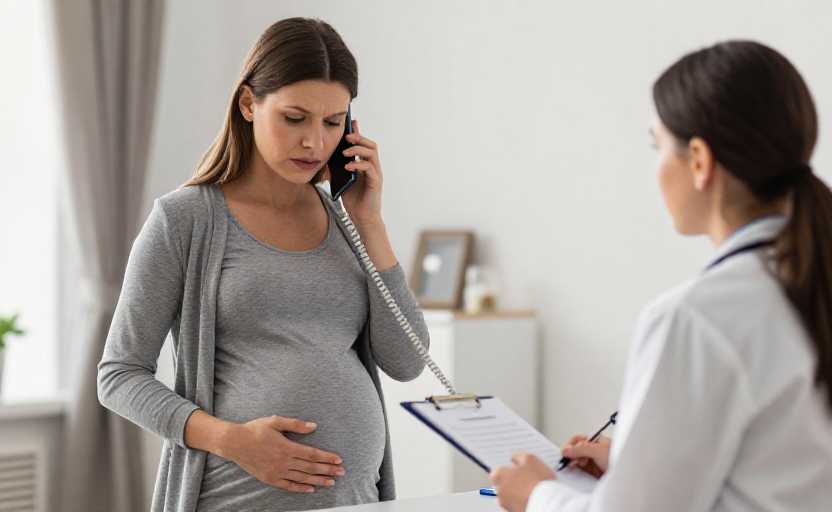
Speaking of this, there must be someone who refutes it. Nowadays, short video platforms and maternal and child APPs have all kinds of knowledge. Why should we spend time and money on classes when they are free? I just met a post-95s pregnant mother last month. She has more than 400 pregnancy guides in her favorites of Xiaohongshu. She went to the emergency room for three consecutive days at midnight when she was 32 weeks old. Every time, she felt like she was going to have labor due to contractions. It was not until she got to the hospital that she realized they were false contractions. When she came to class, her eyes were swollen like walnuts. She was told on the Internet that one moment said "go to the hospital when the contractions are regular" and the other "don't rush to have a baby slowly". The more she looked at it, the more confused she became, and she would start crying if something was not right. There was also a pregnant mother from a well-off family who signed up for a private high-end prenatal class worth more than RMB 20,000. The teacher taught the European and American concept of "natural birth without intervention" throughout the course, and even taught her how to eat ketogenic meals to control the weight of the fetus. As a result, her pelvis was narrow and the biparietal diameter of the fetus was too large. During the 38-week evaluation, the doctor directly told her to undergo a cesarean section. She could not use any of the content she had learned before. Instead, she was in emo for several days because of the huge gap.
In fact, there are two completely different ideas about prenatal training in the industry. There is no absolute right or wrong, it just depends on whether it is suitable for you. The first type is the "medically oriented" group, which focuses on covering the entire process of medical knowledge, from the standard method of counting fetal movements, the essentials of Lamaze breathing to the steps of postpartum wound care. The other type is the "emotion-oriented" group. They basically don't talk about hard core knowledge. They spend most of their time doing handicrafts, flower arrangements, and practicing pregnancy yoga. They focus on relieving anxiety and are suitable for young pregnant mothers who have good physical fitness but are prone to overthinking. After class, they feel better than anything else. When we do community welfare training now, we usually neutralize the two. We don't force you to memorize the standard value of the interval between contractions, and we don't teach it all as a leisure class. For example, when I talk about Lamaze breathing, I will say that there is no need to memorize "when contractions come, first breathe in for three seconds and then breathe out for five seconds." When it really hurts, you can find your own comfortable breathing rhythm. Even if you take a big breath to relieve the pain, that's no problem.
Oh, by the way, many people think that prenatal care training is only for pregnant mothers, but it is really not the case. I was particularly impressed by a father-to-be who read a guide on the Internet to massage the legs of his late-pregnant wife to eliminate edema. After the massage, his wife kicked him in pain. He was particularly aggrieved and said that he had checked the acupoints for three days. Only when he came to class did he learn that the edema areas should not be pressed hard at all, but should be pushed gently from the ankles to the calves. After he went back and tried it once, his wife said that the swelling in her legs was much lighter the same day. There were also several classes where we simulated burping a newborn. The expectant fathers’ postures were all kinds of weird. Some raised the baby like a grenade, and some covered the baby’s face with their whole hands and laughed. It’s better to practice than to throw the baby in a hurry.
When I was pregnant with my eldest son, I had just been a midwife for just two years. I felt that I dealt with pregnant women every day and knew everything. However, a B-ultrasound at 37 weeks showed that the fetus was wrapped around the neck for two weeks. I cried when I took the report. My mind was filled with "Will there be hypoxia?" So now when I teach students, I always set aside half an hour to talk about "Attitude Adjustment in Emergency Situations." Many people have learned a lot of knowledge, but when they encounter something, their minds go blank, and their mentality collapses, which can lead to problems.
Last month, a trainee who had just given birth specially came to give me a wedding candy. She said that it was so painful during the birth that she had forgotten all the breathing techniques. Just remember that I joked in class, "If it hurts, just scold your husband. Don't hold it in, it will save you energy." She sat on the delivery bed and scolded her husband for almost half an hour. She gave birth not long after the cervix was fully dilated, and there was no tear. In fact, to put it bluntly, prenatal care training has never asked you to get perfect marks in the exam, nor does it ask you to follow the standard answers during pregnancy. It just gives you a reassurance in your pocket so that you will not be scrambling to think about it when you encounter something. If you can think of one or two words that can be used, the lesson will be worthwhile.
Disclaimer:
1. This article is sourced from the Internet. All content represents the author's personal views only and does not reflect the stance of this website. The author shall be solely responsible for the content.
2. Part of the content on this website is compiled from the Internet. This website shall not be liable for any civil disputes, administrative penalties, or other losses arising from improper reprinting or citation.
3. If there is any infringing content or inappropriate material, please contact us to remove it immediately. Contact us at:
