
Benefits of flexibility training
The core value of flexibility training has never been "demonstrative skills" such as being able to do the splits or lowering the waist. It is to build a buffer zone for the body to resist risks from the three dimensions of sports performance, daily activities and long-term health. This is the most practical summary after I have practiced CrossFit for 7 years and taught yoga for 3 years, and stepped on countless pitfalls of "deadlifting, Achilles tendon pain".
Let me talk about an interesting bias. When I was in the weight room a few years ago, many of my bodybuilding friends scorned flexibility training. They felt that spending time on leg presses was better than doing two more sets of bench presses. There was even a saying that "too much joint mobility will reduce the stability of force output." This view is actually not completely wrong. If you only do long-term passive static stretching, and immediately press a heavy weight after stretching, it is indeed possible that the muscle viscosity decreases and the proprioception fails to keep up, resulting in unstable force production. However, this is due to the wrong training sequence and method, not a problem with flexibility training itself.
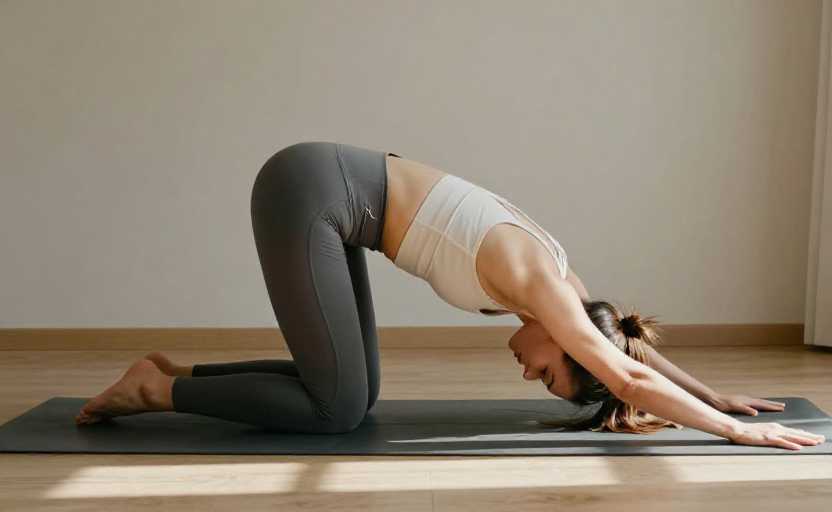
I once led a student who was doing back-end development. He sat in an office for a long time. How tight was his iliopsoas muscle? When I was lying on my back, I couldn't straighten one leg and raise it to 45 degrees with the ground. When I deadlifted to 100kg, my waist suddenly flashed. I went to the rehabilitation department to take a picture, but nothing happened. The doctor said that the hip flexors were not active enough, and my waist was forced to compensate when I lifted the weight. Later, he followed me and added dynamic flexibility training three times a week for 15 minutes each time, including simple movements such as walking lunges, twists, hip circles, and cat-cow poses. After two months, he deadlifted 110kg steadily, and his waist never hurt again.
It's not just people who exercise who need to take advantage of this bonus. Many people who don't usually exercise have actually been suffering from poor flexibility for a long time. When I wake up in the morning, my waist is as stiff as a slate, my arms hurt when I stretch my arms to reach a cup on the top of the wardrobe, I squat down to tie my shoelaces and cannot stand up for a long time, or even my soles always wear out when I walk, and my feet sprain at every turn. In all likelihood, these minor problems are related to local muscle tension and insufficient joint mobility. A few years ago, my mother always sprained her ankle while dancing in the square. When I checked, her ankle mobility was half the normal value. Later, I taught her to stand and do ankle circles and hold towels with her toes while watching TV every day for five minutes each time. After two months, she no longer sprained her ankle. When dancing in square dance, her kicks are half higher than those of the aunt next to her.
Nowadays, there is a lot of controversy about flexibility training on the Internet. Yoga factions recommend long-term static maintenance, saying that it can deeply relax muscles.; Warm up before the strength circle and do all dynamic stretching, as you are afraid of losing strength after doing static stretching. ; The rehabilitation department now recommends PNF stretching, which is the "stretch-confrontation-restretch" model, saying that it is the most efficient in improving range of motion. In fact, no one is right or wrong. It just depends on your needs: if you want to relax and have a good sleep before going to bed, static stretching for a few minutes will be very comfortable. ; When warming up before playing ball or running, you must choose dynamic stretching to activate your muscles. ; If you have an old injury and want to restore the range of motion, it is right to follow a rehabilitation practitioner to do PNF. Don’t just stick to one method.
What many people don’t know is that flexibility training can even help regulate mood. Feel it for yourself. When you are anxious and stressed, do your shoulders hunch unconsciously and your neck becomes so stiff that it is difficult to turn it? I stayed up for three days in a row to catch up on my education and training homework. I was so irritable that I couldn't see anything. I then did 10 minutes of thoracic spine flexibility training, which included kneeling turns and chest-opening stretches. After finishing it, I breathed a long sigh of relief, and half of the "tightness" in my whole body was relieved. This is not some metaphysics. Studies have proven that long-term muscle tension is positively correlated with cortisol levels. Actively relaxing muscles and increasing mobility is itself a way to relax emotions.
Anyway, no matter whether I practice strength that day or not, I will stretch for 10 minutes. I have never pursued the "standard movements" of doing splits and touching the ground, lowering my waist and touching my feet. For ordinary people, as long as you don’t get stuck when you stand up after sitting for a long time, move heavy objects without shaking your waist, and don’t feel sore after walking or standing for a long time, you have reaped the biggest benefits of flexibility training. There is really no need to do those fancy and difficult movements. The most useful ones are those that suit you.
Disclaimer:
1. This article is sourced from the Internet. All content represents the author's personal views only and does not reflect the stance of this website. The author shall be solely responsible for the content.
2. Part of the content on this website is compiled from the Internet. This website shall not be liable for any civil disputes, administrative penalties, or other losses arising from improper reprinting or citation.
3. If there is any infringing content or inappropriate material, please contact us to remove it immediately. Contact us at:
