
Postpartum recovery copywriting
It is neither the anxious business of "missing the golden period and you will have urinary leakage, wide hips, and aging quickly" exaggerated by institutions, nor is it the metaphysics of "recover naturally after lying down for a hundred days" as the old man said. The essence is "during the one-year postpartum physiological recovery period, first solve the pathological problems that affect the quality of life, and then adjust the physical condition according to your own needs." All those who ask you to shell out tens of thousands of yuan to package a full series of repairs as soon as you are out of confinement are basically trying to make money from you.
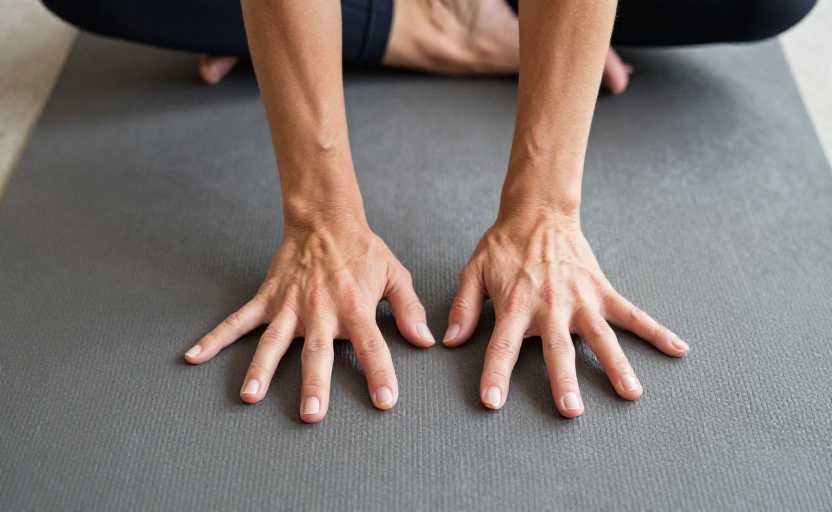
A while ago, I accompanied my cousin who had just given birth to a 42-day review. I happened to meet a girl who was crying to the doctor with the test sheet from the institution. She said that the institution said that her rectus abdominis was separated by three fingers and her pelvic floor muscles were about to fall out. She would not be able to conceive a second child without repair. When the doctor checked, she found that her separation was only one and a half fingers and her pelvic floor muscle strength was level 4. There was nothing wrong at all. She could just go home and practice Kegels. To put it bluntly, the nature of those free tests is no different from the barber shop Tony who tells you that your hair is dry and split and you need to get a care card. They are all just to magnify a small problem and make money from you.
In fact, there are currently two groups of opinions on postpartum recovery. One group is the clinical group in public hospitals, which emphasizes "evaluation first and then intervention, and no trouble if there is no abnormality." Their standards are very clear: if the separation of the rectus abdominis is within 2 fingers at the 42-day review, the pelvic floor muscle strength reaches level 3 or above, and the separation of the pubic symphysis is less than 1 cm, then there is no need. If you want any paid rehabilitation program, be careful not to hold heavy objects, avoid standing and squatting for long periods of time, and spend 10 minutes every day doing Kegels and abdominal breathing. You can basically return to your pre-pregnancy state in about half a year. The most objectionable thing is to abuse the abdomen and wear tight corsets just after the confinement. On the contrary, it will increase the pressure on the pelvic floor, and in severe cases, it can lead to organ prolapse.
The other group is for postpartum rehabilitation institutions. They emphasize "golden period intervention". They believe that within 6 months after delivery, fat is still in a free state and muscle tension has not yet been completely fixed. With the help of techniques and instruments, you can return to the pre-pregnancy state more quickly. This statement is actually not completely unreasonable - if your abdomen is indeed straight after reexamination. If the muscle separation is more than 3 fingers, the pelvic floor muscle strength is less than level 2, or the pubic symphysis is separated by more than 2 cm and it is painful to walk, it is indeed more efficient to find a certified rehabilitation practitioner from a regular institution to cooperate with instrument intervention than to practice at home. The premise is that you must first go with the examination report from the hospital. Don't believe the so-called "free evaluation" that the institution gives you.
After I gave birth to my first son, my 42-day reexamination was just on the edge of the passing mark. My pelvic floor muscle strength was level 3, and my rectus abdominis separation was 1.5 fingers. The doctor didn’t prescribe a rehabilitation program for me, so he printed out a diagram of Kegel movements and asked me to do two sets of Kegel exercises every day while the baby was sleeping. Each set was 15 times, with each contraction lasting 3 seconds and relaxing for 3 seconds. Don't feel embarrassed to practice. I was doing it secretly when I was breastfeeding, watching TV shows, and even squatting on the toilet. No one could tell. I persisted like this for more than two months. During the 3-month review, it was all up to standard, and my belly was almost flat. Even my mother asked me if I secretly had it repaired.
Speaking of this, someone must have asked, are the pelvic repair and rectus abdominis muscle reduction techniques that are so popular on the Internet useful? I specifically asked my relatives in the obstetrics and gynecology department, and they said that if the pelvis is truly rotated and the pubic symphysis is severely separated, it does require manual reduction, but that needs to be done by a doctor, not by a technician in an institution who can press your crotch back hard twice. Most people think that their hip width after giving birth is not a pelvic problem at all, but that the fat accumulated during pregnancy is piled on the crotch and buttocks, and the abdominal protrusion caused by the separation of the rectus abdominis muscles makes the crotch width wider. Once the fat disappears and the rectus abdominis muscles return, they will naturally become narrower. Several friends around me spent thousands on pelvic repairs. In the end, the dimensions were not reduced at all, but the pressure on the pubic bone caused pain for several days.
There is also a lot of controversy about waist girdle. Some people say that wearing it after giving birth can tighten the belly, while others say that wearing it will hurt the body. In fact, objectively speaking, wearing a soft girdle in the first three days after cesarean section is to compress the wound and reduce the traction pain when you get out of bed and walk. If you want to slim down your belly, wearing a girdle that is so tight that you can’t breathe is really unnecessary. My colleague wore a corset for a month after giving birth. Later, the leakage became more serious. When she went to the hospital, she was told that the pelvic floor muscles were being compressed even more, which was not worth the loss.
Oh, by the way, if you really plan to find an institution for repair, be sure to check whether their rehabilitation therapist has a "Postpartum Rehabilitation Practitioner Certificate" and whether the equipment is formal. Don't look for someone who opens a small store in a community and starts working after half a month of training. The money spent is a trivial matter, but the real loss will be if the massage breaks the body.
In fact, I have met so many friends who have given birth, and I have never seen anyone who has been ruined for the rest of his life because he did not have paid postpartum repairs. Instead, I have seen many who were so anxious that they ran around for repairs as soon as they were just out of confinement. They spent a lot of money and were so tired that they lost milk. Really, the most important thing about postpartum recovery is not how quickly you can return to your pre-pregnancy figure, but whether you are comfortable or not - if you sneeze and leak urine, or your back hurts so much that you can't straighten up after holding the baby for half an hour, then go to the hospital first for a comprehensive evaluation and how to treat it. Treatment, if you don’t feel any discomfort, just take your baby slowly, move around slowly, eat well, drink well and sleep well, and you will recover before you know it. After all, the amount of exercise you take with your baby is really more effective than going to the gym for two hours. Don’t be fooled by those anxiety-producing copywriting.
Disclaimer:
1. This article is sourced from the Internet. All content represents the author's personal views only and does not reflect the stance of this website. The author shall be solely responsible for the content.
2. Part of the content on this website is compiled from the Internet. This website shall not be liable for any civil disputes, administrative penalties, or other losses arising from improper reprinting or citation.
3. If there is any infringing content or inappropriate material, please contact us to remove it immediately. Contact us at:
